Man’s Struggle with Nature
In 1845, British authorities organized a major Arctic exploration expedition. Two ships, HMS Terror and HMS Erebus, set out on a voyage that would change the face of British trade and discover the Northwest Passage – the sea route between the Atlantic and Pacific Oceans. However, the Arctic expedition ended in tragedy.
The expedition, which carried supplies for nearly five years, never reached its destination. Ten years after its launch and after several rescue expeditions, there is no trace of the British ships.
The only trace was the discovery of three graves on Beechey Island. Located in the Arctic archipelago of Nunavut, Canada, the island became the final resting place of three members of Franklin’s crew – Petrol Officer John Torrington, Royal Marine Private William Braine, and Seaman John Hartnell.
As it turned out, after more than 150 years and hundreds of studies, the crew had been ravaged by scurvy, a disease caused by a lack of vitamin C in the diet and the effects of lead on the human body. The lead contained in the cans of the world’s first canned food proved fatal.
Weakened and ravaged by disease, they sailed in the wrong direction. The ships were stranded in a winter that proved too harsh to endure. Despite the presence of leading specialists on board, led by Captain Sir John Franklin, the expedition ended tragically, resulting in the deaths of 129 men.
However, the rescue expeditions allowed them to discover and describe areas unknown until the time of the disaster. This was a significant advance despite the loss of the ships.
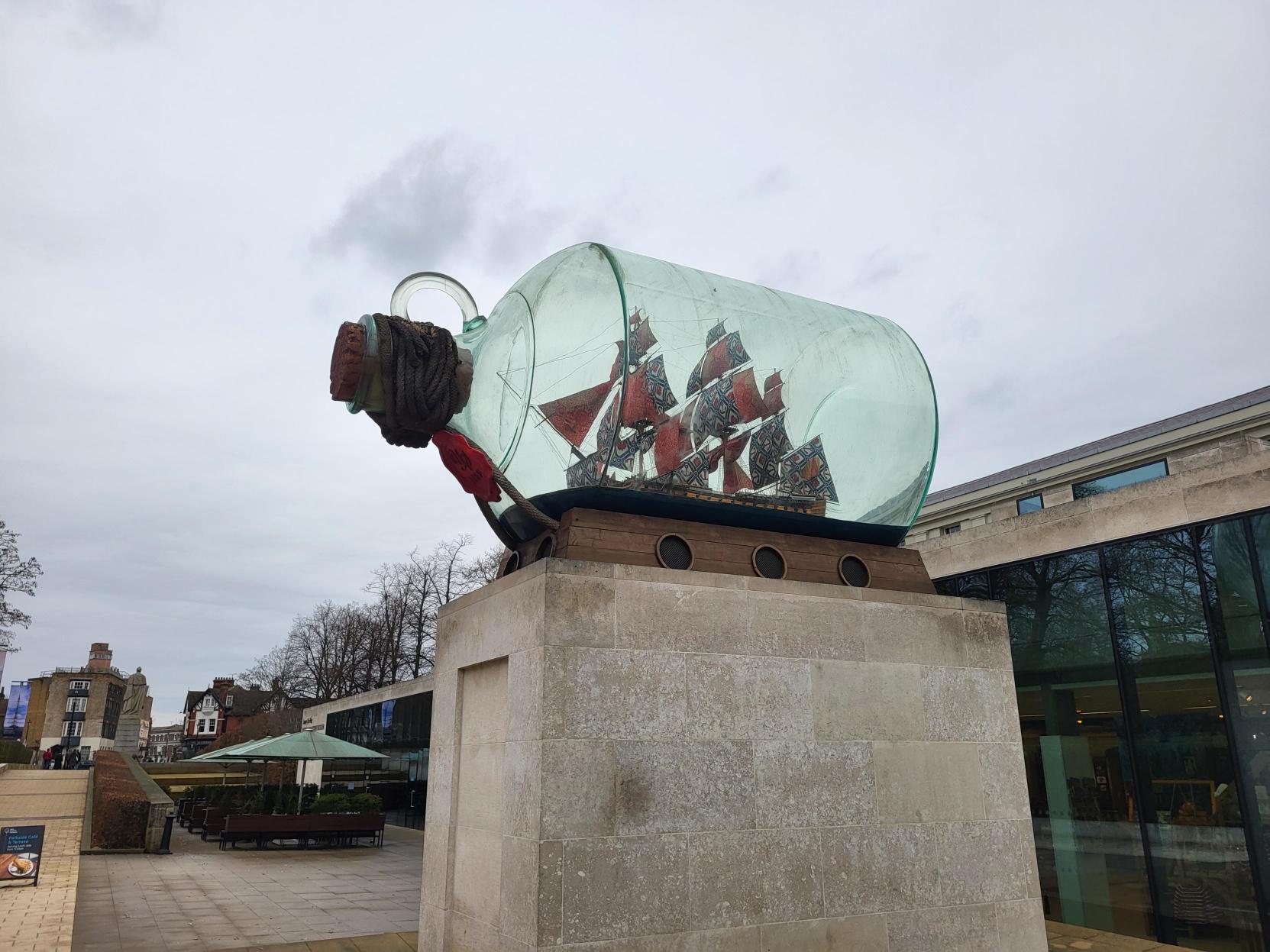
Relics from this expedition can be found at The National Maritime Museum in Greenwich, London.
SOURCES: LINK
❄️🚢 2025/2026 © Michał Szudrowicz 1 rok, Mechanika i budowa maszyn, Akademia Nauk Stosowanych w Koninie