Groundhog Day – A Strange and Deeply Rooted American Tradition
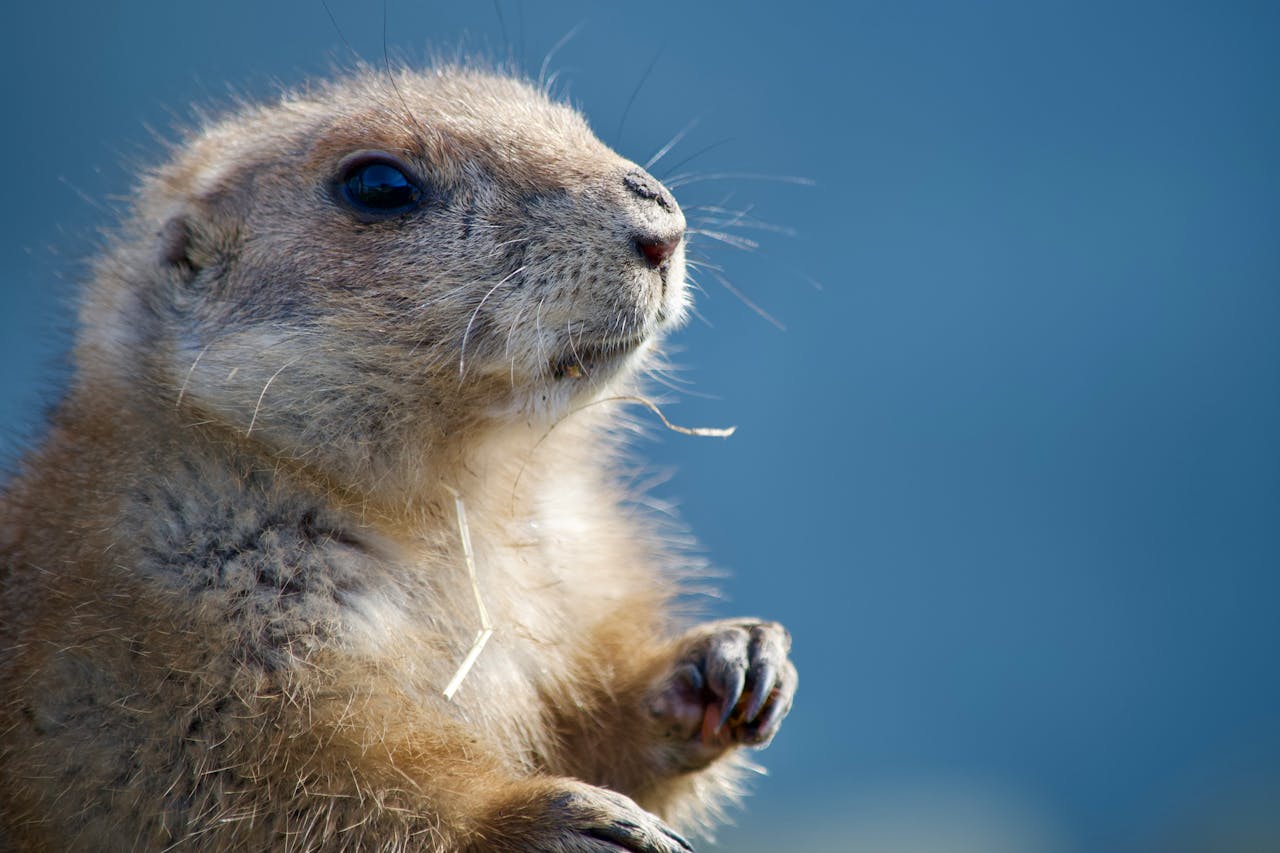
Photo by Photo by Marian Havenga taken from LINK
Every February 2nd, people in the United States and Canada observe a holiday called Groundhog Day. On this day, a groundhog – a small mammal that hibernates in winter – becomes the center of a weather prediction tradition that is both fun and full of history.
Why a Groundhog? History and Origins
The idea of using an animal to predict the weather goes back many centuries in Europe, tied to the Christian holiday of Candlemas (February 2). Candlemas was traditionally a day when people would bring candles to be blessed in church, and folklore developed that if the day was sunny, winter would continue; if it was cloudy, then spring would come soon.
In parts of Germany and German-speaking Europe, people watched animals that hibernated – like badgers, bears, or hedgehogs – on Candlemas Day. If these animals emerged and saw their shadow, it was believed that winter would stick around for longer. If they did not see their shadow, it was taken as a sign that winter was ending.
When German immigrants settled in Pennsylvania in the 1700s, they brought this weather-lore tradition with them. Badgers were not common in eastern North America, so settlers substituted a similar native hibernating animal – the groundhog – for weather forecasting.
In 1886, Clymer H. Freas, the city editor of the Punxsutawney Spirit newspaper, promoted the idea of a local weather-predicting groundhog. A year later, in 1887, the first official Groundhog Day celebration was held at Gobbler’s Knob near Punxsutawney, Pennsylvania. Members of the newly formed Punxsutawney Groundhog Club declared the groundhog – later named Punxsutawney Phil – to be the official seasonal forecaster.
Today, thousands of people gather each year in Punxsutawney to watch Phil emerge from his burrow before sunrise. If he sees his shadow on a sunny day, the tradition says there will be six more weeks of winter. If he does not see his shadow because it’s cloudy, spring is expected to arrive early.
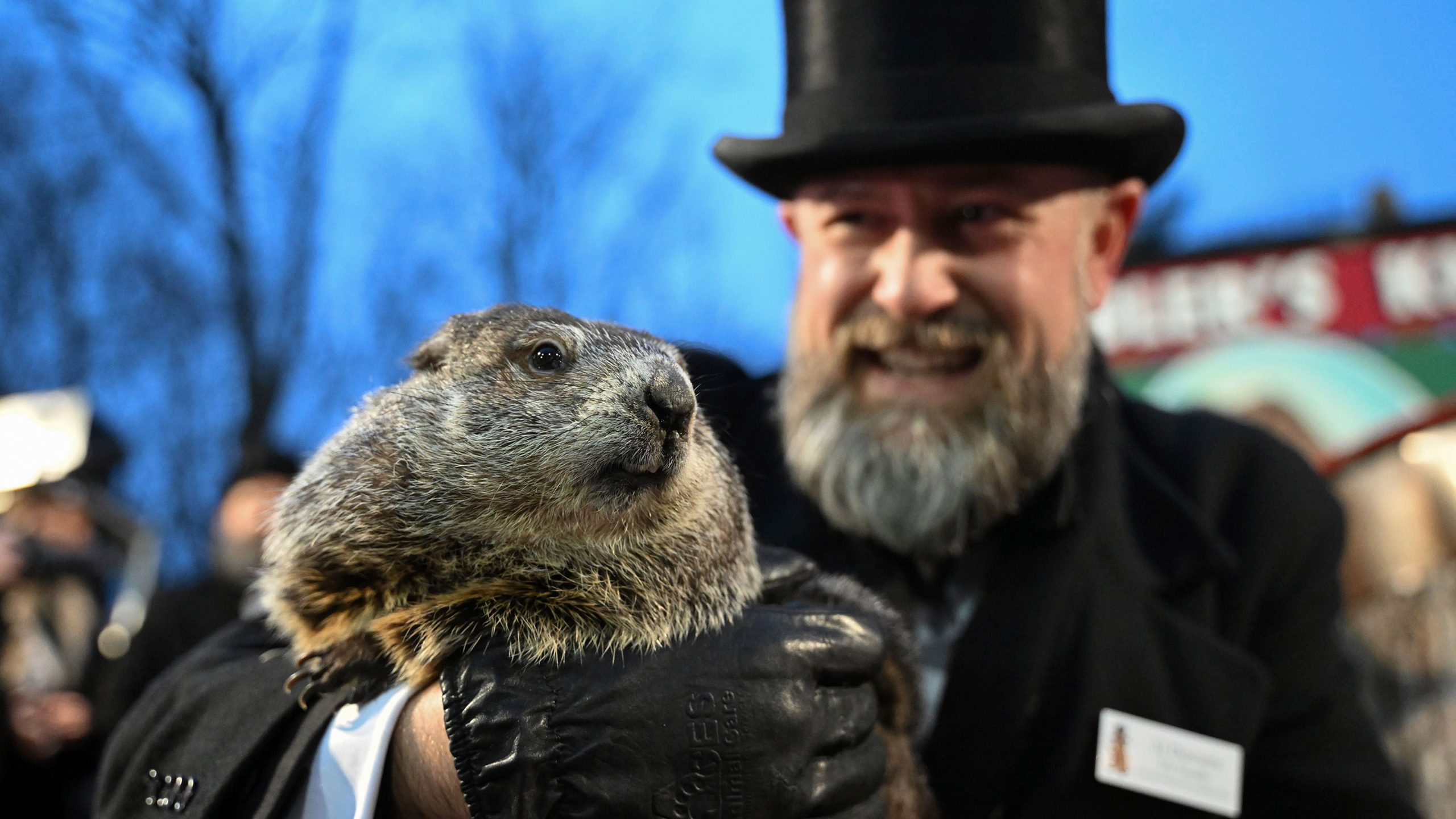
Photo taken from LINK. Groundhog Club handler A.J. Dereume holds Punxsutawney Phil during the 138th celebration of Groundhog Day on Gobbler’s Knob in Punxsutawney, Pa., Friday, Feb. 2, 2024. AP Photo/Barry Reeger, File
A Tradition More Cultural Than Scientific
Although Punxsutawney Phil’s predictions are not scientifically accurate – studies show that his forecasts are correct less than half the time – the ritual remains a popular cultural event, attracting tourists and media interest each February 2.
The custom also has a deeper calendar connection: Candlemas falls about six weeks before the spring equinox, the same amount of time that Groundhog Day predicts winter’s length – a folk way of marking the seasonal midpoint.
Groundhog Day is more than just a way to guess the weather. It connects modern celebrations with ancient traditions, shows how folklore can evolve, and brings people together in a humorous winter ritual.
Essential Vocabulary
🔹hibernates – hibernuje (przebywa w stanie zimowego snu)
🔹tradition – tradycja
🔹folklore – folklor / wierzenia ludowe
🔹Candlemas – święto Ofiarowania Pańskiego / Matki Bożej Gromnicznej
🔹predict / prediction – przewidywać / prognoza
🔹hibernate – zapadać w sen zimowy
🔹burrow – nora (zwierzęcia)
🔹shadow – cień
🔹midpoint – środek / połowa okresu
🔹scientific – naukowy
Sources Used
▪️Groundhog Day – Encyclopaedia Britannica (history, Candlemas connection and animal lore)
▪️Groundhog Day – Wikipedia (origins, German tradition, Punxsutawney event)
▪️Groundhog Day history – Weather.gov and related summaries (Candlemas traditions and 1886 founding)
▪️Groundhog Day History – historical overview of animal symbolism and shadow lore
 Photo by Freepik taken from LINK
🦫❄️🌤️2025/2026 © mgr Eliza Ciszewska, Akademia Nauk Stosowanych w Koninie